

Top Eco-Friendly Fiber Manufacturer Advancing Sustainable Textile Materials
News originally published by
EIN Presswire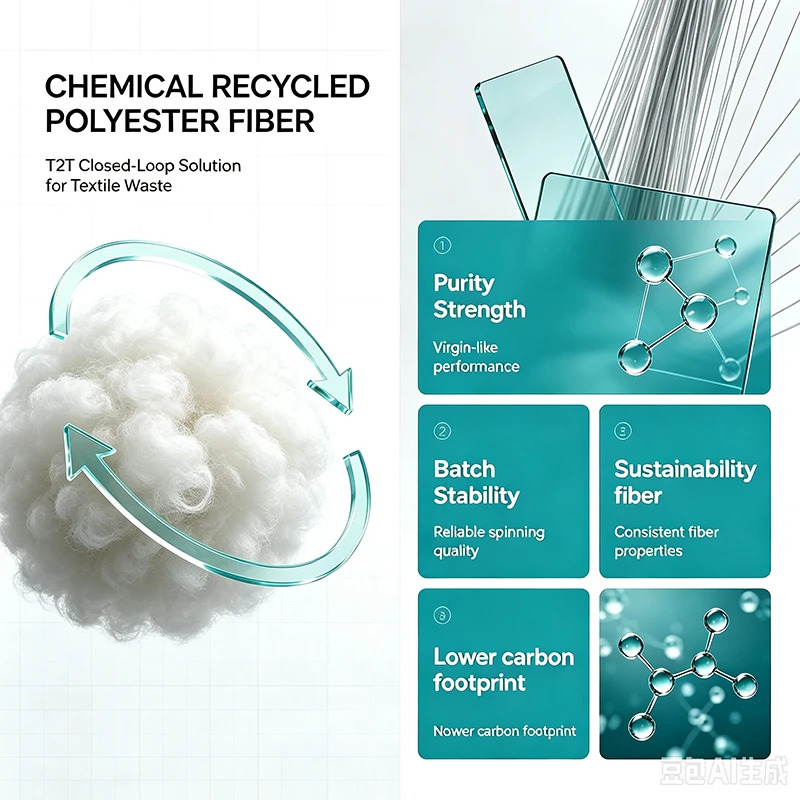
Chemical Recycled PSF
SHANGHAI, CHINA, November 11, 2026 /EINPresswire.com/ --
The global textile industry is undergoing a significant transformation as manufacturers, brands, and material suppliers respond to growing expectations for environmental responsibility, resource efficiency, and improved product performance. Eco-friendly fibers are becoming increasingly important in this transition, offering opportunities to reduce the environmental impact of textile production while maintaining the durability, versatility, and functional properties required by modern applications. Against this industry backdrop, Shanghai Different Advanced Material Co., Ltd. is part of the evolving materials sector, where innovation in fiber development and specialized polyester solutions plays an important role in supporting the next generation of textile products.
As sustainability becomes a more influential consideration throughout the textile supply chain, the definition of high-quality fiber manufacturing continues to expand. Traditional performance indicators, including tensile strength, dimensional stability, color consistency, and processing compatibility, remain essential. However, manufacturers are also paying greater attention to material efficiency, production processes, and the potential environmental advantages of alternative fiber technologies. This combination of performance and sustainability is creating new opportunities for companies specializing in advanced synthetic fibers.
Eco-Friendly Fibers Gain Importance Across the Textile Industry
Environmental considerations are increasingly influencing purchasing decisions in the textile and materials markets. Brands and industrial buyers are evaluating not only the finished appearance and functional characteristics of fabrics but also the materials used to produce them. This shift is encouraging manufacturers to explore fiber solutions that can contribute to more responsible production practices and support changing market expectations.
Polyester remains one of the most widely used synthetic materials because of its versatility, strength, lightweight characteristics, and compatibility with different manufacturing processes. At the same time, the industry is exploring ways to improve the sustainability profile of polyester products through material innovation, resource optimization, recycling technologies, and more efficient production methods.
Eco-friendly fiber development therefore involves more than introducing a single alternative material. It requires a comprehensive understanding of raw materials, fiber structures, manufacturing conditions, and end-use requirements. Manufacturers must balance environmental objectives with the practical needs of textile producers, who depend on consistent quality and reliable material performance.
For Shanghai Different Advanced Material Co., Ltd., the development of advanced polyester materials is relevant to this broader industrial transition. Its involvement in specialized fiber categories reflects the importance of providing material solutions that address different requirements across the textile supply chain.
The Growing Demand for High-Performance Fibers
High-performance fibers occupy an important position in modern textile manufacturing because they are designed to meet demanding functional requirements. Depending on their composition and engineering characteristics, these materials can offer properties such as improved strength, durability, resilience, and processing adaptability.
The applications for high-performance fibers extend across numerous industries. Apparel manufacturers use specialized fibers to develop fabrics that provide comfort, shape retention, and long-term wear resistance. Home textile producers require materials that can maintain their appearance and structural integrity through repeated use. Technical textile manufacturers may prioritize mechanical strength, dimensional stability, and compatibility with specialized production techniques.
As application requirements become more diversified, textile manufacturers increasingly seek fiber suppliers capable of understanding different production environments. A material that performs effectively in one application may require adjustments in another because of differences in spinning methods, fabric construction, finishing treatments, and final product specifications.
High-performance fibers must therefore be evaluated through a combination of material characteristics and practical processing performance. Consistency between production batches is particularly important, as variations in fiber properties can affect yarn quality, fabric uniformity, and manufacturing efficiency.
Shanghai Different Advanced Material Co., Ltd. includes High Performance Fibers among its product categories. This product direction corresponds with the broader demand for specialized materials that can support demanding textile applications. By focusing on fiber characteristics and application requirements, manufacturers in this segment can contribute to the development of more adaptable and technically capable textile products.
Functional Polyester Fibers Support Product Innovation
In addition to strength and durability, modern textile applications increasingly require materials with specific functional characteristics. Functional polyester fibers have consequently become an important category within the synthetic fiber industry, providing opportunities to develop products with properties tailored to particular market requirements.
Polyester is widely used because of its favorable combination of physical properties, processing versatility, and broad application potential. Through adjustments to fiber composition, cross-sectional structure, surface characteristics, and manufacturing techniques, producers can develop polyester materials with different performance profiles.
Functional polyester fibers may be designed to address requirements such as moisture management, thermal comfort, softness, improved fabric handling, antistatic behavior, or other application-specific characteristics. The actual performance depends on the particular fiber formulation, engineering approach, and subsequent textile processing conditions.
These specialized materials are increasingly relevant to apparel, sportswear, home textiles, and technical fabric production. In the clothing sector, for example, functional fibers can help manufacturers develop fabrics that respond to different wearing conditions. In home textiles, material selection can influence softness, durability, ease of care, and long-term usability. Industrial textile applications may place greater emphasis on stability, processing compatibility, and specialized functional requirements.
Shanghai Different Advanced Material Co., Ltd. also features Functional Polyester Fibers within its product portfolio. This category reflects the industry's movement toward more differentiated polyester solutions, in which material properties are developed around the intended application rather than relying exclusively on conventional fiber characteristics.
For textile manufacturers, access to functional polyester materials can create additional flexibility when designing fabrics for specific customer groups and market segments. It also highlights the importance of cooperation between fiber developers, yarn producers, fabric manufacturers, and downstream brands.
Balancing Environmental Considerations With Material Performance
One of the central challenges facing the eco-friendly fiber industry is the need to balance environmental objectives with reliable product performance. Textile manufacturers cannot evaluate sustainability independently of quality, cost, processing requirements, and product lifespan. Materials must satisfy commercial and technical expectations while offering meaningful improvements in resource utilization or environmental impact.
For polyester fiber producers, potential sustainability strategies include the use of recycled feedstocks, improvements in production efficiency, reduced material waste, and the development of fibers designed for more efficient downstream processing. However, the environmental benefits of any particular product depend on its actual composition, manufacturing methods, supply chain, and end-of-life treatment.
Transparency is therefore becoming increasingly important. Buyers may request information about raw material sources, recycled content, production standards, testing procedures, and relevant certifications. Clear technical documentation helps customers assess whether a fiber is suitable for their sustainability targets and application requirements.
Quality assurance remains equally important. Fiber manufacturers need to maintain stable production conditions and conduct appropriate testing to verify product consistency. Parameters such as fineness, tensile properties, elongation, thermal behavior, and uniformity can all influence the performance of the finished textile.
For companies operating in the advanced material sector, responding to these expectations requires continuous technical development. Product innovation must be supported by manufacturing expertise, quality management, and an understanding of the changing needs of downstream industries.
Industry Applications Create Opportunities for Specialized Fibers
The growing diversity of textile applications is creating additional demand for materials with differentiated properties. Rather than relying on a single fiber type for every purpose, manufacturers increasingly combine different materials to achieve specific fabric characteristics.
In apparel manufacturing, fiber selection influences comfort, appearance, durability, and ease of maintenance. Sportswear producers may prioritize lightweight construction, moisture management, and flexibility, while manufacturers of everyday clothing often seek a balance between softness, durability, and cost efficiency.
Home textiles represent another important application area. Bedding, upholstery, curtains, and decorative fabrics require materials that can maintain their functional and visual properties under regular use. Polyester-based fibers are widely considered in these applications because of their versatility and adaptability to different fabric constructions.
Technical textiles introduce further requirements. Depending on the application, manufacturers may need materials with specific mechanical, thermal, or functional characteristics. These products often require closer cooperation between material suppliers and fabric developers to ensure that fiber properties match the intended manufacturing process.
For Shanghai Different Advanced Material Co., Ltd., High Performance Fibers and Functional Polyester Fibers represent two product categories relevant to these varied market needs. Their inclusion in the company's portfolio reflects the importance of specialized fiber materials in supporting textile product development across different application sectors.
The Importance of Manufacturing Consistency and Technical Cooperation
As the fiber industry becomes more specialized, manufacturing consistency is increasingly important to long-term supplier relationships. Textile producers generally require materials that can be processed reliably across multiple production batches. Even relatively small variations in fiber properties may influence spinning performance, yarn uniformity, fabric appearance, and production efficiency.
Establishing dependable manufacturing processes involves careful control of raw materials, equipment conditions, production parameters, and inspection procedures. Manufacturers must also understand how different fiber specifications interact with customer equipment and downstream processing methods.
Technical communication plays an important role in this process. Buyers need accurate product information to evaluate fiber suitability, while suppliers benefit from understanding the intended application, processing conditions, and desired finished-product characteristics. This exchange can help reduce development time and improve the likelihood of achieving consistent results.
Long-term cooperation is particularly valuable when customers require customized material specifications or are developing new textile products. Suppliers that understand both material properties and practical manufacturing requirements can become important participants in the product development process.
Looking Ahead: Innovation in Sustainable Fiber Manufacturing
The future of eco-friendly fiber manufacturing will likely be shaped by several interconnected developments. Recycling technologies, alternative raw materials, improved production efficiency, and growing demand for functional textiles are all influencing the direction of the industry.
At the same time, buyers are becoming more attentive to measurable sustainability performance. General environmental claims are increasingly insufficient without supporting information about material composition, production processes, and relevant product standards. Manufacturers will therefore need to strengthen both technical innovation and product transparency.
Advanced polyester materials are expected to remain relevant during this transition because of their established industrial applications and potential for further material development. The challenge for manufacturers is to improve product performance while identifying practical opportunities to reduce environmental impact throughout the material lifecycle.
Shanghai Different Advanced Material Co., Ltd. operates within this changing market environment, with High Performance Fibers and Functional Polyester Fibers forming part of its product offering. As textile manufacturers continue to seek materials that combine functional value with evolving sustainability expectations, specialized fiber suppliers will remain important to the development of the global textile supply chain.
Company Profile: Shanghai Different Advanced Material Co., Ltd.
Shanghai Different Advanced Material Co., Ltd. is a company operating in the advanced material and polyester fiber sector. Its product portfolio includes High Performance Fibers and Functional Polyester Fibers, serving as part of its offering to the textile and related materials markets. Through its focus on specialized fiber categories, the company is positioned within an industry that increasingly values material functionality, product consistency, and manufacturing adaptability. Further information about the company and its products can be found on its official website: www.different-polyester.com.
Address: No.58 Jian an Rd,Fengjing Industey zone Shanghai
Official Website: https://www.different-polyester.com/
Jiahuan Wang
Shanghai Different Advanced Material Co., Ltd.
haodan@zsdfl.com
Legal Disclaimer:
EIN Presswire provides this news content "as is" without warranty of any kind. We do not accept any responsibility or liability for the accuracy, content, images, videos, licenses, completeness, legality, or reliability of the information contained in this article. If you have any complaints or copyright issues related to this article, kindly contact the author above.
