

Advanced Macroporous Strong Base Anion Resin In the World: Applications Across Industrial Water Treatment
Structural Resilience of Macroporous SBA Resins in Harsh Industrial Environments
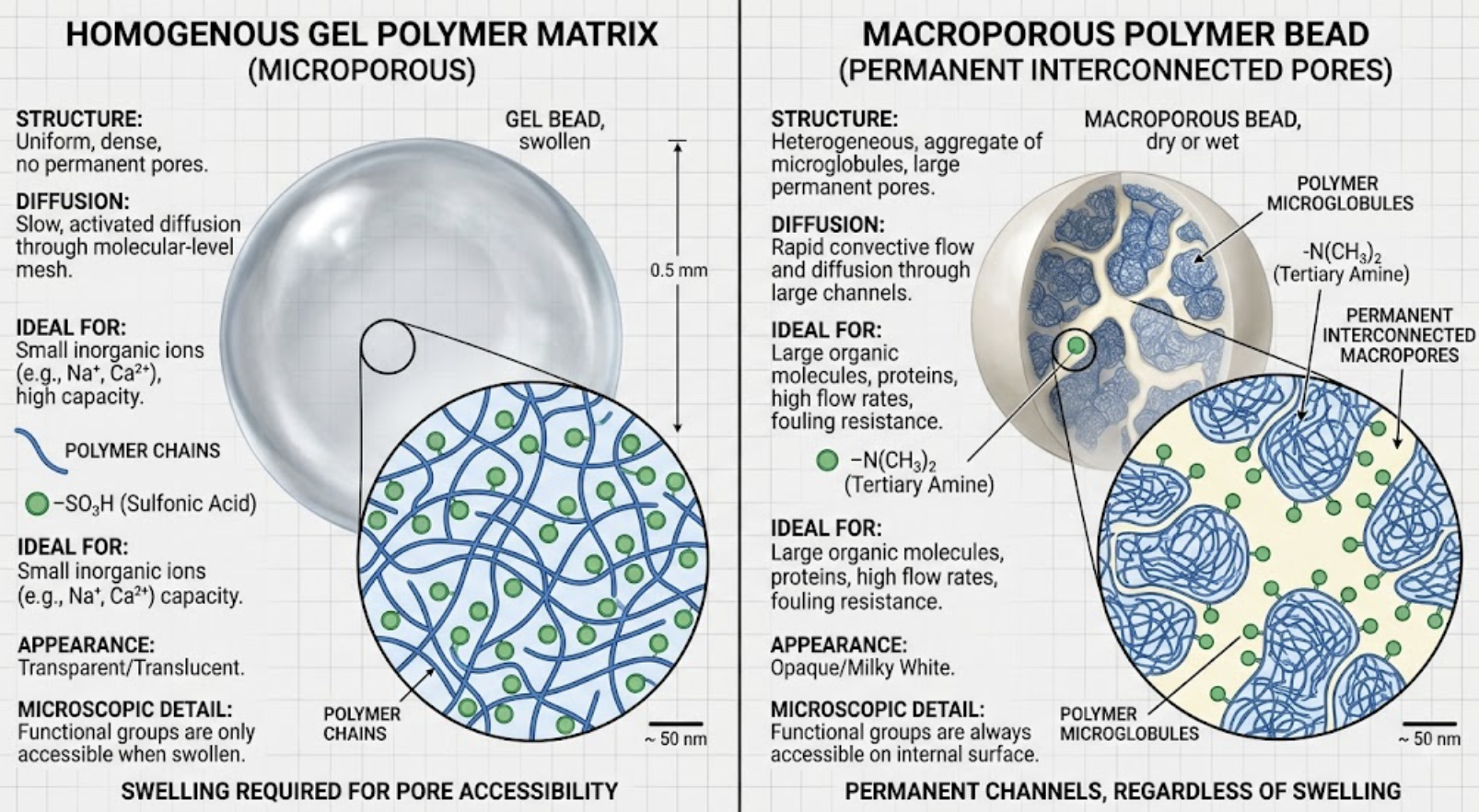
Macroporous strong base anion (SBA) resins derive operational strength from a unique structural architecture synthesized during polymer cross-linking. Unlike conventional gel resins, which rely on polymer network swelling to create temporary molecular spaces, macroporous polymers possess permanent physical channels. This robust skeleton remains intact even when dried or exposed to drastic chemical transitions. Consequently, the permanent pore channels enable large, complex molecules to migrate in and out of the resin matrix without causing internal structural disruption.
This physical stability plays a vital role when operating under aggressive industrial conditions. High-flow operations frequently cause physical compaction and pressure drops across standard resin beds. Macroporous SBA media resist physical crushing, maintaining smooth hydrodynamic performance and uniform flow distribution throughout extended operating cycles. Furthermore, these resins exhibit exceptional resistance to osmotic and thermal shocks. Rapid changes in chemical concentration can cause standard resins to swell and shrink violently, leading to bead fracture. The rigid macroporous framework absorbs these dimensional stresses effectively, extending media lifespan.
In addition to physical toughness, macroporous SBA resins resist chemical degradation caused by strong oxidizing agents and elevated operational temperatures. Reinforced cross-linking mitigates polymer breakdown, ensuring stable exchange capacity over thousands of bed volumes. As a result, industrial facilities reduce media replacement frequency and maintain consistent effluent quality across volatile chemical streams.
Zero Liquid Discharge (ZLD) Pretreatment and High-Salinity Brine Polish
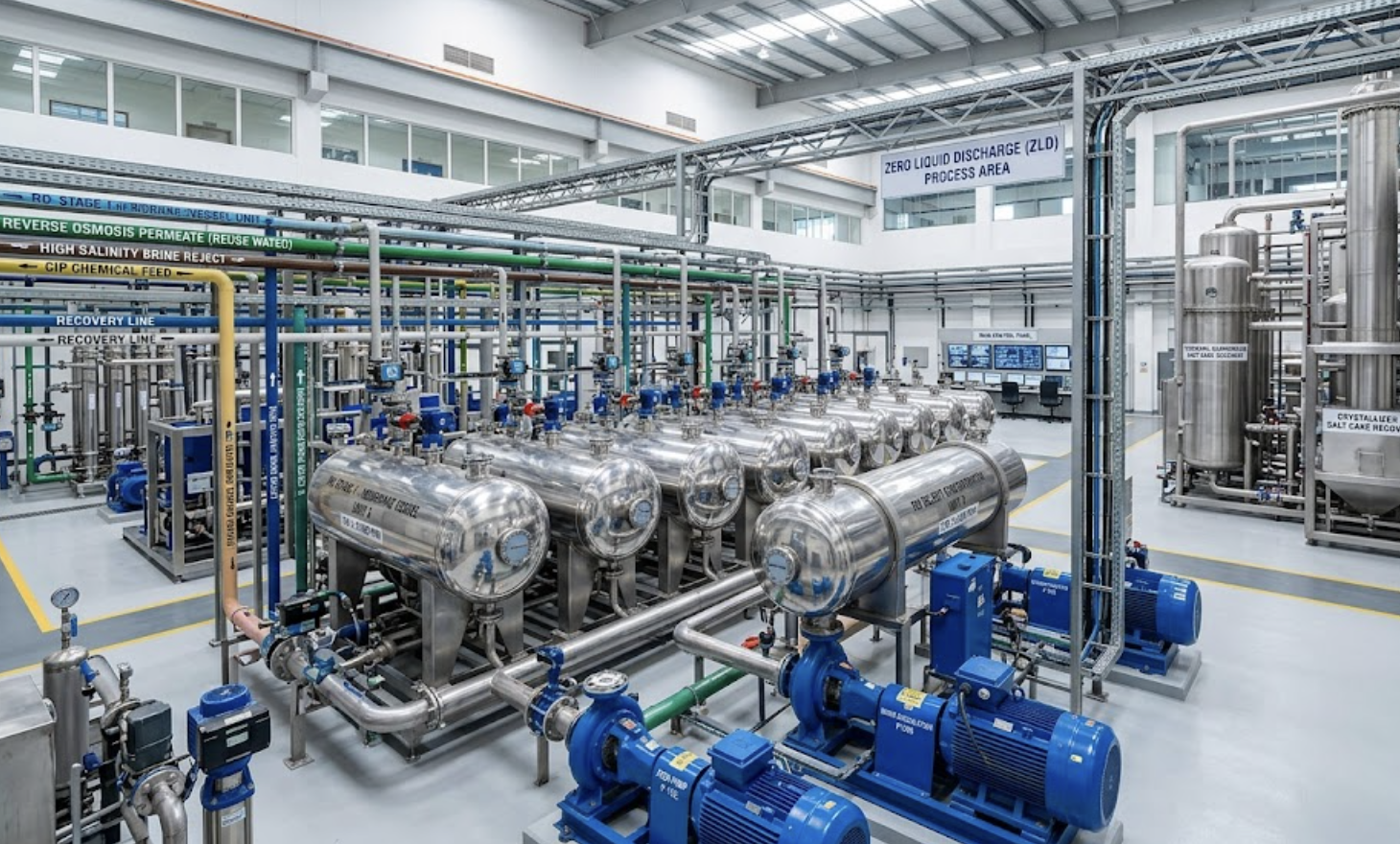
Industrial Zero Liquid Discharge systems demand uncompromising performance from pretreatment media. In these closed-loop architectures, brine concentrators and high-pressure reverse osmosis units process streams with elevated total dissolved solids. Uncontrolled mineral scaling and organic foulants rapidly degrade membrane surfaces, driving up energy costs and causing unscheduled shutdowns. Incorporating specialized SBA media into ZLD pretreatment loops solves these operational bottlenecks by selectively removing trouble-causing anions and organic compounds.
High-salinity brine streams present severe chemical challenges, as high sodium and chloride concentrations compete directly with target contaminants. Macroporous SBA media overcome these osmotic constraints through tailored functional group chemistry and high internal surface areas. Facilities utilizing targeted ion exchange resin solutions for hardness removal in zero liquid discharge (ZLD) systems systematically polish feed water before high-recovery thermal or membrane separation processes. Eliminating trace scaling precursors protects downstream crystallizers from foulant buildup, ensuring continuous operation at design heat-transfer efficiencies.
Moreover, macroporous SBA resins play a vital role in high-salinity salt recycling systems. By selectively removing trace sulfates, silicates, and organic complexes from saturated salt solutions, these resins safeguard chlor-alkali electrochemical cells against permanent membrane damage. The operational longevity of macroporous SBA media under saturated brine conditions significantly lowers chemical expenditure and maximizes pure salt recovery in heavy industrial operations.
Industrial Decolorization and High-Capacity Organic Scavenging
Natural organic matter, humic substances, and synthetic color bodies represent major operational threats to industrial water purification and biochemical processing systems. In boiler feed water preparation and ultrapure water production, organic molecules pass through primary gel resins and foul secondary polished beds. In food, beverage, and sugar refining applications, stubborn color complexes compromise end-product purity. Macroporous SBA resins excel in these applications due to their high pore volume and reversible adsorption characteristics.
The large pore channels of macroporous SBA resins easily accommodate bulky, long-chain organic molecules that would otherwise trap permanently inside standard gel resins. Standard gel resins suffer from irreversible organic fouling because large foulants lock into the dense polymer matrix, causing rapid capacity loss. In contrast, macroporous SBA resins allow full penetration during service and complete elution during chemical desorption cycles. Operating as organic scavengers ahead of primary demineralization trains, these resins shield downstream high-capacity gel resins from irreversible contamination.
In sugar refining and biotechnology fermentation, macroporous SBA media perform targeted decolorization and pigment extraction. Fermentation broths containing amino acids, organic acids, and active pharmaceutical ingredients require precise purification without damaging delicate target molecules. The macroporous SBA matrix selectively captures high-molecular-weight color pigments and hydrophobic impurities while maintaining high product yields. Industrial processors rely on these durable polymers to achieve crystal-clear liquids while optimizing regeneration chemical consumption.
Selective Heavy Metal and Anionic Contaminant Recovery in Metallurgical Waste
Industrial wastewater streams from electroplating, mining, and semiconductor manufacturing contain valuable heavy metals and toxic anionic species. Stringent environmental discharge limits compel industrial operators to treat these streams with high precision. Standard precipitation methods produce large volumes of hazardous sludge and fail to recover precious materials. Macroporous SBA resins offer a sustainable alternative by capturing specific anionic complexes and heavy metal anions directly from complex waste streams.
In electroplating and metal finishing operations, hexavalent chromium, cyanide complexes, and noble metal anions exist alongside high concentrations of background salts. Macroporous SBA resins exhibit strong selectivity for these complex anions, concentrating trace contaminants even in acidic or highly saline industrial rinse waters. Once saturated, the resin beds undergo targeted chemical stripping, yielding concentrated metal streams suitable for onsite electrowinning or chemical recovery.
Furthermore, macroporous SBA media effectively remove persistent anionic contaminants such as perchlorate, nitrate, and arsenic compounds from industrial effluents. The mechanical stability of the macroporous polymer ensures reliable long-term performance under abrasive slurry conditions often encountered in mining operations. By transforming hazardous wastewater treatment into closed-loop material recovery, industrial facilities satisfy strict environmental compliance standards while generating tangible economic value from recovered mineral resources.
From Advanced Polymer Synthesis to Turnkey EPC: Sunresin's Integrated Solutions
Achieving peak performance with macroporous strong base anion media requires precise coordination between resin synthesis, system design, and operational control. Advanced materials provider Sunresin (Sunresin New Materials Co. Ltd.) addresses this requirement by delivering custom-synthesized polymeric media alongside fully integrated processing equipment. By controlling every stage of production—from monomer selection and pore structure control to functionalization—the manufacturer ensures consistent batch-to-batch quality across its SEPLITE® resin line.
Optimal resin application relies heavily on empirical validation under actual field conditions. Sunresin conducts comprehensive laboratory feasibility studies and pilot-scale testing to optimize column dimensions, flow velocities, and regeneration protocols for complex industrial fluids. This empirical approach eliminates guesswork, allowing plant engineers to predict long-term performance and chemical consumption accurately before full-scale implementation.
Beyond resin manufacturing, Sunresin New Materials Co. Ltd. provides complete Engineering, Procurement, and Construction (EPC) solutions for automated ion exchange systems. Integrating proprietary SEPLITE® macroporous SBA resins into custom-engineered vessels, automated valve manifolds, and real-time control architectures ensures seamless system commissioning and reliable long-term operation. Through global technical support and ongoing optimization services, Sunresin helps industrial clients optimize operational costs, improve water recycling rates, and maintain environmental compliance across demanding global markets.
For more information regarding advanced resin technologies and custom separation solutions, visit https://www.seplite.com/.
Sunresin New Materials Co. Ltd.
Sunresin New Materials Co. Ltd.
+ +86 29 8669 1600
email us here
Legal Disclaimer:
EIN Presswire provides this news content "as is" without warranty of any kind. We do not accept any responsibility or liability for the accuracy, content, images, videos, licenses, completeness, legality, or reliability of the information contained in this article. If you have any complaints or copyright issues related to this article, kindly contact the author above.
