How Hongrita’s Smart Injection Molding Factory Achieves Tighter Tolerances and Shorter Cycle Times
HONG KONG, July 17, 2026 /EINPresswire.com/ -- For procurement engineers and OEM sourcing teams evaluating a precision plastic or silicone components supplier, the question has moved. It is no longer simply whether a factory can run a mold at speed. The more useful question is whether the factory can hold dimensional consistency across tens of thousands of shots, control flash in precision silicone parts, and shorten production cycles without destabilizing quality. A Smart Injection Molding Factory, at its most useful, connects mold precision, process discipline, and quality monitoring into a single, manageable production loop. Hongrita, founded in 1988 and operating facilities in Shenzhen, Zhongshan, and Penang, builds on exactly that integration through precision molds, intelligent plastic molding technology, equipment integration, multi-material and multi-component tooling, and LSR process expertise.
Smart Injection Molding Factory Starts with Digitalized Manufacturing, Not Isolated Automation
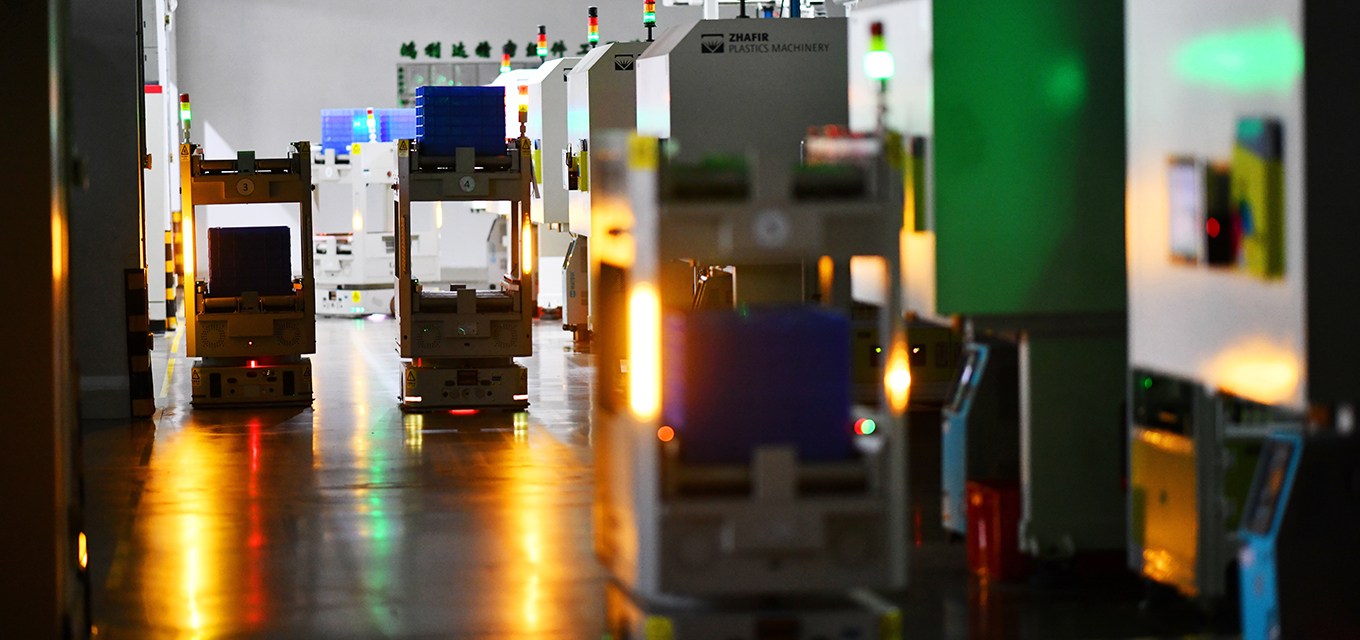
A smart injection molding factory that achieves tighter tolerances and shorter cycle times does not do so by adding equipment to a conventional floor. Hongrita’s approach centers on a digitalized intelligent manufacturing platform that connects high-performance mold intelligent manufacturing, a precision injection molding workshop, digital management, and factory process display into one operating environment. Tolerance control becomes a matter of process management rather than individual machine adjustment, and cycle-time improvement is treated as a system optimization challenge rather than a single-machine speed target. Zhongshan serves as the center for innovation R&D, engineering, major projects, and production activity, where tooling decisions and production standards interact most directly. The Industrie 4.0 China Awards 2024 Smart Factory recognition publicly validates this digitalized platform approach.
High-Performance Mold Intelligent Manufacturing Protects Precision Before Production Begins
Tolerance stability in a production run is established before the first shot is taken. Hongrita’s mold manufacturing technology addresses this through precision and complexity management, smart manufacturing integration, multi-cavitation mold construction, advanced tooling solutions, and earlier supplier involvement during the product development phase. By engaging with product structure, mold manufacturability, material behavior, and production rate at the design stage, dimensional problems can be identified before they carry over into a running tool. This matters most for multi-material, multi-component, and LSR precision molds, where small geometry errors translate directly into flash, dimensional drift, or part rejection at volume. Tighter tolerance control, in this manufacturing environment, is a consequence of mold engineering discipline applied upstream, not a specification added afterward.
Precision Injection Molding Workshop Turns Process Discipline into Repeatable Output
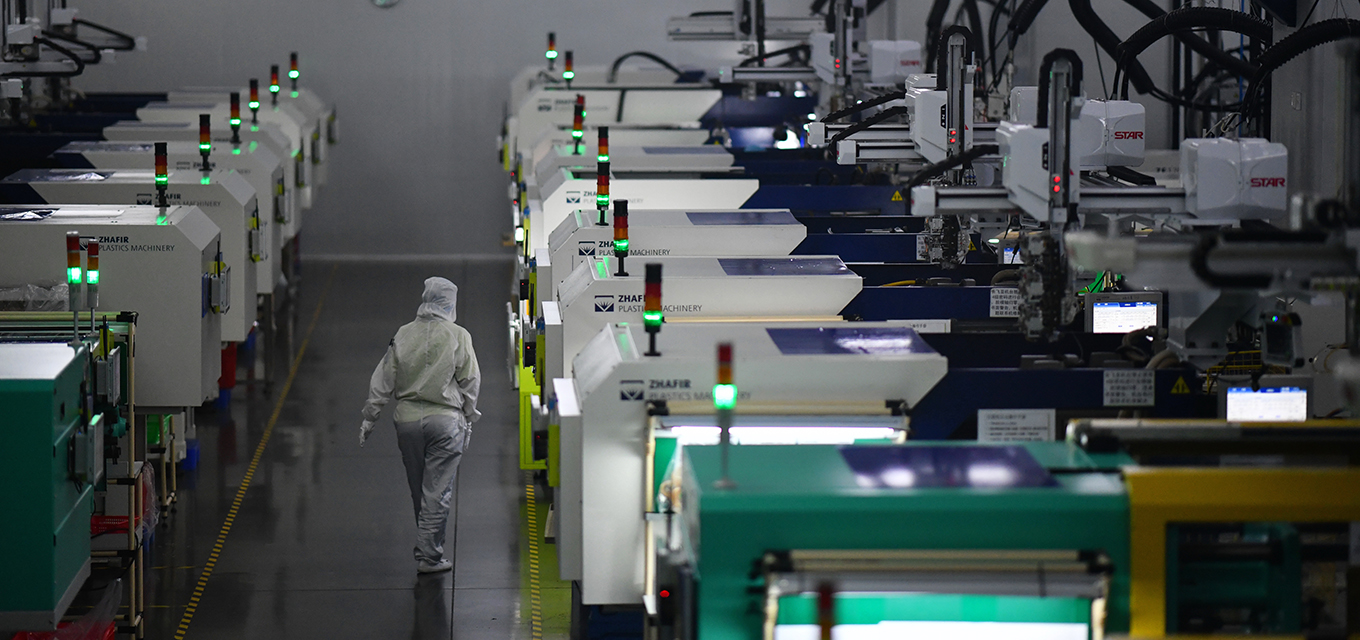
Between the mold design phase and the finished part sits the precision injection molding workshop, where dimensional, appearance, and performance standards become consistent manufacturing outputs. Hongrita’s workshop discipline covers high-quality product manufacturing, innovative materials and process exploration, customized production for diverse customer requirements, and production efficiency enhancement through fine manufacturing practices and advanced equipment. Shorter cycle times in this context are the outcome of improved equipment configuration, reduced setup variation, and process parameters that hold across shifts. Quality monitoring and timely improvements within the same workshop environment allow defect-rate reduction, product consistency, and production stability to be managed as ongoing process outcomes rather than findings discovered only at final inspection.
Multi-Cavitation Mold Design Creates the Shorter-Cycle Foundation
Multi-cavity molds contribute to shorter cycles through structural design rather than machine speed alone. Hongrita’s multi-cavitation tooling incorporates modular mold structures, interchangeable mold inserts, innovative cooling technology, and selected coatings that serve flexibility, cycle minimization, and long service life together. For volume production programs, the combined benefit is delivery certainty: improved production efficiency, consistent part quality across a larger cavity array, faster turnaround time, reduced total mold quantity, and simplified production setup. Precision tooling examples from Hongrita’s production experience illustrate these outcomes. A pump valve mold runs at 128 cavities in PP with a 10-second cycle. A push rod for syringes runs at 64 cavities in PP with a 9-second cycle. A soft tube mold operates at 8 cavities in PP with a 16-second cycle. These are project-specific figures, not universal production guarantees.
LSR And LIM Process Know-How Supports Flash Control, Consistent Quality, And Complex Parts
Liquid silicone rubber parts add distinct requirements to the tolerance and cycle-time equation. LSR injection molding at Hongrita addresses high precision, reduced flash and waste, multi-component and overmolding compatibility, shorter cycle times, and consistent quality through an integrated approach to mold design, runner systems, and demolding. One documented example from Hongrita’s core competences is the LSR harness plug: 64 cavities, LSR hardness 40, a 20-second cycle, automatic ejection, and no-flash output. This case shows how mold design, runner configuration, and demolding parameters interact in a high-cavitation silicone application. Two-component LSR capabilities extend further: a 2K LSR pacifier mold at 4 plus 4 cavities combining LSR with LSR at a 45-second cycle, and a 2K orange peeler combining PC and LSR at the same 45-second cycle.
Equipment Integration Makes Tolerance and Cycle-Time Control a Managed System
The connection between mold precision and cycle performance requires a managed equipment environment, not just capable tooling. Hongrita’s equipment integration combines patented molds, customized molding machines, turntables, self-developed supporting equipment, detection systems, control software, and management software into efficient molding solutions. Detection systems provide in-process visibility; control software manages process parameters; management software governs production scheduling and pacing; customized machines and turntable structures handle the motion requirements of multi-component and insert molding applications. Together, these elements shift tolerance and cycle-time management from individual machine performance to a coordinated system, a meaningful difference for complex geometries, tight dimensional windows, or high-cavitation silicone tooling.
Quality Monitoring and Certifications Convert Smart Manufacturing into Buyer Trust
Quality monitoring in Hongrita’s precision injection molding workshop focuses on detecting production deviations and making timely corrections. The objective is defect-rate reduction, product consistency, and production stability: outcomes that sourcing teams and quality engineers can audit and document. The certification framework supporting this manufacturing environment includes ISO 9001, ISO 14001, IATF 16949, ISO 13485, ISO 45001, ISO/IEC 27001, ISCC PLUS, and FDA registration. Automotive sourcing teams can reference IATF 16949 for quality-system audit requirements. For medical device applications, ISO 13485 and FDA registration support the supplier qualification pathway. The 2023 Industry 4.0-1i recognition and the 2024 Industrie 4.0 China Awards Smart Factory designation independently verify the platform's standing in the industry.
Technical Resources and Factory Touchpoints Support a Clear Inquiry Path
Hongrita maintains engineering-oriented technical resources for buyers beginning a project conversation. The HRT resource area on the official site includes downloadable materials covering injection molding defects and troubleshooting, in-mold welding for plastic parts, and a multi-components indexing technology reference. Factory and contact touchpoints span Hong Kong, Shenzhen, Zhongshan, and Penang, giving buyers and project teams regional access. Part drawings, material selection, target tolerances, cavity count, appearance requirements, production rate expectations, and validation documentation together determine mold design, process route, and production setup. Engaging with these specifics early is the practical starting point for a project discussion.
As a smart injection molding factory, the capability Hongrita brings to precision plastic and silicone production connects mold engineering, workshop process discipline, equipment integration, and quality monitoring into an auditable, managed manufacturing environment. For project discussions around precision plastic parts, LSR components, multi-cavity tooling, tolerance control, or cycle-time goals, visit Hongrita’s official website at www.hongrita.com
Smart Injection Molding Factory Starts with Digitalized Manufacturing, Not Isolated Automation
A smart injection molding factory that achieves tighter tolerances and shorter cycle times does not do so by adding equipment to a conventional floor. Hongrita’s approach centers on a digitalized intelligent manufacturing platform that connects high-performance mold intelligent manufacturing, a precision injection molding workshop, digital management, and factory process display into one operating environment. Tolerance control becomes a matter of process management rather than individual machine adjustment, and cycle-time improvement is treated as a system optimization challenge rather than a single-machine speed target. Zhongshan serves as the center for innovation R&D, engineering, major projects, and production activity, where tooling decisions and production standards interact most directly. The Industrie 4.0 China Awards 2024 Smart Factory recognition publicly validates this digitalized platform approach.
High-Performance Mold Intelligent Manufacturing Protects Precision Before Production Begins
Tolerance stability in a production run is established before the first shot is taken. Hongrita’s mold manufacturing technology addresses this through precision and complexity management, smart manufacturing integration, multi-cavitation mold construction, advanced tooling solutions, and earlier supplier involvement during the product development phase. By engaging with product structure, mold manufacturability, material behavior, and production rate at the design stage, dimensional problems can be identified before they carry over into a running tool. This matters most for multi-material, multi-component, and LSR precision molds, where small geometry errors translate directly into flash, dimensional drift, or part rejection at volume. Tighter tolerance control, in this manufacturing environment, is a consequence of mold engineering discipline applied upstream, not a specification added afterward.
Precision Injection Molding Workshop Turns Process Discipline into Repeatable Output
Between the mold design phase and the finished part sits the precision injection molding workshop, where dimensional, appearance, and performance standards become consistent manufacturing outputs. Hongrita’s workshop discipline covers high-quality product manufacturing, innovative materials and process exploration, customized production for diverse customer requirements, and production efficiency enhancement through fine manufacturing practices and advanced equipment. Shorter cycle times in this context are the outcome of improved equipment configuration, reduced setup variation, and process parameters that hold across shifts. Quality monitoring and timely improvements within the same workshop environment allow defect-rate reduction, product consistency, and production stability to be managed as ongoing process outcomes rather than findings discovered only at final inspection.
Multi-Cavitation Mold Design Creates the Shorter-Cycle Foundation
Multi-cavity molds contribute to shorter cycles through structural design rather than machine speed alone. Hongrita’s multi-cavitation tooling incorporates modular mold structures, interchangeable mold inserts, innovative cooling technology, and selected coatings that serve flexibility, cycle minimization, and long service life together. For volume production programs, the combined benefit is delivery certainty: improved production efficiency, consistent part quality across a larger cavity array, faster turnaround time, reduced total mold quantity, and simplified production setup. Precision tooling examples from Hongrita’s production experience illustrate these outcomes. A pump valve mold runs at 128 cavities in PP with a 10-second cycle. A push rod for syringes runs at 64 cavities in PP with a 9-second cycle. A soft tube mold operates at 8 cavities in PP with a 16-second cycle. These are project-specific figures, not universal production guarantees.
LSR And LIM Process Know-How Supports Flash Control, Consistent Quality, And Complex Parts
Liquid silicone rubber parts add distinct requirements to the tolerance and cycle-time equation. LSR injection molding at Hongrita addresses high precision, reduced flash and waste, multi-component and overmolding compatibility, shorter cycle times, and consistent quality through an integrated approach to mold design, runner systems, and demolding. One documented example from Hongrita’s core competences is the LSR harness plug: 64 cavities, LSR hardness 40, a 20-second cycle, automatic ejection, and no-flash output. This case shows how mold design, runner configuration, and demolding parameters interact in a high-cavitation silicone application. Two-component LSR capabilities extend further: a 2K LSR pacifier mold at 4 plus 4 cavities combining LSR with LSR at a 45-second cycle, and a 2K orange peeler combining PC and LSR at the same 45-second cycle.
Equipment Integration Makes Tolerance and Cycle-Time Control a Managed System
The connection between mold precision and cycle performance requires a managed equipment environment, not just capable tooling. Hongrita’s equipment integration combines patented molds, customized molding machines, turntables, self-developed supporting equipment, detection systems, control software, and management software into efficient molding solutions. Detection systems provide in-process visibility; control software manages process parameters; management software governs production scheduling and pacing; customized machines and turntable structures handle the motion requirements of multi-component and insert molding applications. Together, these elements shift tolerance and cycle-time management from individual machine performance to a coordinated system, a meaningful difference for complex geometries, tight dimensional windows, or high-cavitation silicone tooling.
Quality Monitoring and Certifications Convert Smart Manufacturing into Buyer Trust
Quality monitoring in Hongrita’s precision injection molding workshop focuses on detecting production deviations and making timely corrections. The objective is defect-rate reduction, product consistency, and production stability: outcomes that sourcing teams and quality engineers can audit and document. The certification framework supporting this manufacturing environment includes ISO 9001, ISO 14001, IATF 16949, ISO 13485, ISO 45001, ISO/IEC 27001, ISCC PLUS, and FDA registration. Automotive sourcing teams can reference IATF 16949 for quality-system audit requirements. For medical device applications, ISO 13485 and FDA registration support the supplier qualification pathway. The 2023 Industry 4.0-1i recognition and the 2024 Industrie 4.0 China Awards Smart Factory designation independently verify the platform's standing in the industry.
Technical Resources and Factory Touchpoints Support a Clear Inquiry Path
Hongrita maintains engineering-oriented technical resources for buyers beginning a project conversation. The HRT resource area on the official site includes downloadable materials covering injection molding defects and troubleshooting, in-mold welding for plastic parts, and a multi-components indexing technology reference. Factory and contact touchpoints span Hong Kong, Shenzhen, Zhongshan, and Penang, giving buyers and project teams regional access. Part drawings, material selection, target tolerances, cavity count, appearance requirements, production rate expectations, and validation documentation together determine mold design, process route, and production setup. Engaging with these specifics early is the practical starting point for a project discussion.
As a smart injection molding factory, the capability Hongrita brings to precision plastic and silicone production connects mold engineering, workshop process discipline, equipment integration, and quality monitoring into an auditable, managed manufacturing environment. For project discussions around precision plastic parts, LSR components, multi-cavity tooling, tolerance control, or cycle-time goals, visit Hongrita’s official website at www.hongrita.com
Hongrita Plastics Ltd.
Hongrita
email us here
Visit us on social media:
LinkedIn
Facebook
YouTube
X
Legal Disclaimer:
EIN Presswire provides this news content "as is" without warranty of any kind. We do not accept any responsibility or liability for the accuracy, content, images, videos, licenses, completeness, legality, or reliability of the information contained in this article. If you have any complaints or copyright issues related to this article, kindly contact the author above.