

Bringing you the latest news on global issues
Provided by AGP
Central Valley Homeowners Facing 30% ‘Hidden Tax’ on Property Due to Extreme Pool Evaporation Rates
Reyes Pool Services, providing expert pool maintenance in the Central Valley for over 20 years.
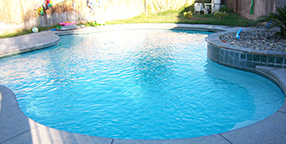
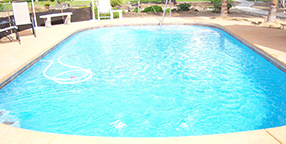
A well-maintained residential swimming pool in Farmersville, CA, showing crystal clear water and efficient filtration infrastructure.
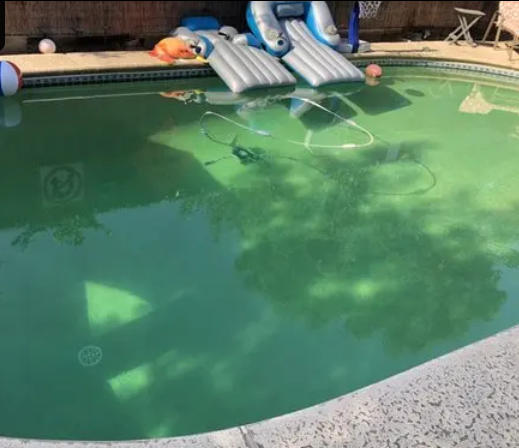
Without precise chemical balancing, rapid evaporation in the Central Valley can quickly lead to algae growth and structural degradation.
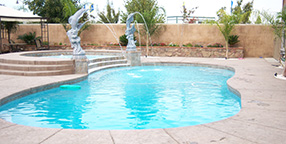
Custom pool infrastructure in the Central Valley requires optimized filtration systems to avoid the compounding cycle of water loss and rising utility bills.
For residents in Farmersville and Visalia, backyard pool maintenance is shifting from a seasonal luxury to a critical infrastructure concern due to strict water auditing.
New analysis reveals Central Valley pool owners lose 30% of their budget to wasted water and chemicals. Learn how to stop the drain and avoid rising costs.
Improper balance doesn't just waste water—it slowly degrades your pool itself.”
— Ricardo Reyes
FARMERSVILLE, CA, UNITED STATES, May 12, 2026 /EINPresswire.com/ -- As the Central Valley grapples with tightening water restrictions and a steady climb in utility costs, a new analysis of regional climate data has identified a burgeoning financial threat to local property owners. Dubbed the "Evaporation Tax," this phenomenon suggests that poorly maintained pool filtration systems are causing homeowners to lose up to 30% of their maintenance budget to wasted chemicals and water.
For residents in Farmersville and Visalia, backyard pool maintenance is rapidly shifting from a seasonal luxury to a critical infrastructure concern. Local municipalities are now auditing residential water usage with unprecedented strictness, leaving homeowners vulnerable to both high utility bills and potential regulatory penalties.
The Science Behind the "Hidden Tax"
The Central Valley’s unique climate creates a "perfect storm" for pool owners. According to data from the National Oceanic and Atmospheric Administration (NOAA) Central Valley Evaporation Tables, the region's high-heat environment accelerates liquid-to-gas conversion at rates significantly higher than coastal areas. When this environmental pressure is combined with inefficient equipment, the financial toll compounds.
Research from the University of California, Davis (UC Davis) Center for Water-Energy Efficiency indicates a direct link between water loss and energy consumption. As water evaporates, the concentration of total dissolved solids (TDS) increases, forcing filtration systems to work harder and longer to maintain clarity. This cycle—verified by California Department of Water Resources (DWR) Annual Usage Reports—is what experts are now calling a "hidden tax" on the Central Valley lifestyle.
The Compounding Cycle of Inefficiency
"Many homeowners are unaware that a filtration system operating at even 10% lower efficiency can lead to a compounding cycle of chemical waste and water loss," states Ricardo Reyes, founder of Reyes Pool Service. With over 20 years of experience monitoring local pool infrastructure, Reyes has seen firsthand how minor equipment failures lead to major financial leaks.
The "Evaporation Tax" isn't just about the water visible to the eye. When a pool loses water to evaporation, it doesn’t just lose H2O; it leaves behind the chemicals intended to keep the water safe. Homeowners often respond by over-treating the pool with more chlorine and acid, which, in a high-evaporation environment, can actually damage the pool's interior surface and finish.
"Maintaining a precise chemical balance isn't just about water clarity," Reyes explains. "It’s about preserving the structural integrity of the asset in a high-heat environment. If the balance is off due to rapid evaporation, you aren't just losing water—you are slowly degrading the pool itself."
A Localized Response to a National Crisis
While the American West has long dealt with "megadrought" narratives, the crisis is now hitting individual pocketbooks in a very specific way. By identifying evaporation and system waste as the primary "villains," local experts are providing a data-backed explanation for why utility bills continue to rise even when families feel they are conserving water.
The financial impact is particularly sharp for those unaware of how hardware efficiency affects water retention. A pump or filter that is not optimized for the Central Valley’s specific climate becomes a liability. Beyond the monthly bill, there is the growing concern of municipal compliance as local governments look for ways to curb excessive residential consumption.
Key Findings for Farmersville and Visalia Residents:
Audit Risks: Local municipalities are strictly auditing residential usage, making efficient pool systems a necessity for regulatory compliance.
The 30% Threshold: Inefficient systems can waste nearly one-third of the total annual water and chemical investment.
Infrastructure Preservation: Beyond the immediate cost of water, improper balance caused by evaporation can lead to long-term structural degradation of the pool asset.
About Reyes Pool Service
Located in Farmersville, CA, Reyes Pool Service has been a staple of the Central Valley’s pool maintenance and infrastructure industry for two decades. Founded by Ricardo Reyes, the company specializes in high-efficiency filtration management, equipment repair, and chemical balancing tailored specifically to the extreme climate of the San Joaquin Valley.
Luis Chavez
Chavez Web Design, LLC
email us here
Visit us on social media:
Facebook
Other
Legal Disclaimer:
EIN Presswire provides this news content "as is" without warranty of any kind. We do not accept any responsibility or liability for the accuracy, content, images, videos, licenses, completeness, legality, or reliability of the information contained in this article. If you have any complaints or copyright issues related to this article, kindly contact the author above.
