

Rising Demand for Office Spaces to Boost India Commercial Real Estate Market at 21.6% CAGR
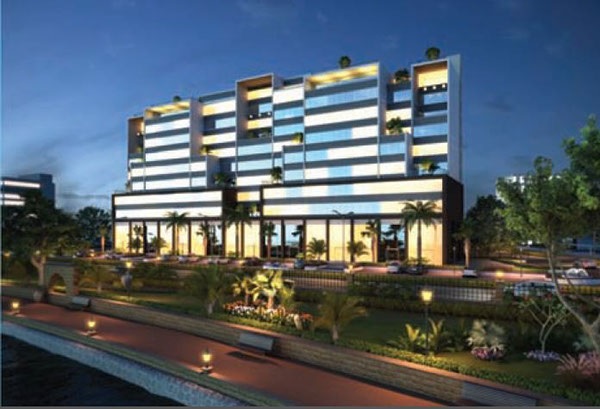
India Commercial Real Estate Market
The India Commercial Real Estate industry is projected to grow to 643.08 USD Billion by 2035, exhibiting a CAGR of 21.6 during the forecast period 2025 - 2035.
The India Commercial Real Estate Market is transforming skylines and opportunities alike, where strategic growth meets visionary investments for a dynamic urban future.”
NY, UNITED STATES, December 8, 2025 /EINPresswire.com/ -- The India Commercial Real Estate Market has evolved into one of the most resilient and fast-growing sectors of the country’s economy. Driven by rapid urbanization, large-scale infrastructure development, and a thriving services industry, this market continues to attract domestic and international investors. Over the last decade, India has witnessed a significant shift in commercial real estate demand patterns—from traditional office spaces to flexible work environments, from conventional retail outlets to large-format malls, and from small warehouses to technologically advanced logistics hubs. As businesses expand across Tier 1, Tier 2, and even Tier 3 cities, the commercial property landscape is transforming at an unprecedented pace.— Market Research Future
The India Commercial Real Estate Market was valued at USD 74.8 billion in 2024. It is expected to expand significantly, rising from USD 90.96 billion in 2025 to USD 643.08 billion by 2035. This growth reflects a robust compound annual growth rate (CAGR) of 21.6% throughout the 2025–2035 forecast period.
Office Space: Demand Surges as India Becomes a Global Business Hub
The office segment remains the backbone of the India Commercial Real Estate Market. Multinational companies, IT services, fintech startups, and global capability centers are expanding across major cities such as Bengaluru, Hyderabad, Pune, Mumbai, Chennai, and Delhi NCR. The demand for Grade A office buildings—featuring advanced amenities, sustainability certifications, and digital integration—has surged as companies prioritize employee experience, energy efficiency, and long-term value.
Hybrid work models initially posed uncertainties, but businesses now increasingly prefer high-quality workplaces that foster productivity, collaboration, and innovation. This shift has triggered steady leasing activities and increased investments in premium office development. The influx of global technology firms and the rise of co-working operators have further diversified the office market. Flexible workspace providers are expanding aggressively as startups, SMEs, and large enterprises seek scalable, cost-effective workplace solutions. This trend is likely to continue, shaping a more versatile and robust office ecosystem across urban centers.
Get Free Sample Report for Detailed Market Insights: https://www.marketresearchfuture.com/sample_request/20709
Retail Real Estate: Reinventing Shopping Experiences
India’s retail real estate segment has undergone a major transformation, supported by rising consumer spending, evolving shopping behavior, and the expansion of global and domestic brands. Well-designed malls offering a mix of shopping, dining, and entertainment have become cultural destinations in major metro cities. Even Tier 2 cities are witnessing strong demand for modern retail spaces as urban consumers increasingly seek premium lifestyle experiences.
Brick-and-mortar stores remain integral despite the growth of e-commerce. Retailers now adopt omni-channel strategies—blending online and offline platforms—to reach wider audiences. This shift has led to the rise of experience-based retail, where spaces are designed not only for transactions but also for brand storytelling, community engagement, and interactive displays. Developers are responding with smarter layouts, enhanced interior designs, and improved footfall management to ensure that malls remain vibrant and competitive.
Industrial and Logistics: Riding the Wave of E-Commerce and Manufacturing
One of the fastest-growing segments within the India Commercial Real Estate Market is industrial and logistics real estate. The exponential rise of e-commerce, expansion of last-mile delivery networks, and government-backed manufacturing initiatives have driven demand for large warehouses, distribution centers, and modern logistics hubs. Companies are investing heavily in automation, robotics, and digital supply chain systems, prompting developers to build technologically advanced facilities that support efficient operations.
The implementation of the Goods and Services Tax (GST) and development of multi-modal logistics parks have streamlined interstate movement of goods, reducing transportation delays and operational bottlenecks. This regulatory improvement has encouraged businesses to consolidate their warehousing operations into larger, centralized facilities. States such as Maharashtra, Karnataka, Tamil Nadu, Haryana, and Uttar Pradesh are attracting major logistics investments due to improved connectivity, availability of industrial land, and favorable policies.
Buy Now & Get Exclusive Discount on this Report: https://www.marketresearchfuture.com/checkout?currency=one_user-USD&report_id=20709
Commercial Real Estate Emerges as a Major Investment Magnet
Investors view the India Commercial Real Estate Market as a stable, high-yielding opportunity. Real Estate Investment Trusts (REITs) have played a critical role in increasing transparency and attracting institutional capital. Grade A office assets in particular have yielded strong rental incomes, making them a preferred choice among global investors. With more large-scale commercial properties being developed, the pipeline for future REIT listings continues to strengthen.
Retail and industrial assets have also gained attractiveness, driven by strong occupancy levels, stable lease structures, and increasing demand from diverse business sectors. The shift toward sustainable and energy-efficient buildings has further boosted investor confidence, as green-certified assets often command premium valuations. India’s long-term economic growth outlook and rapid digitalization serve as additional catalysts, making commercial real estate a dependable investment class.
Rise of Tier 2 Cities as New Commercial Hotspots
While metro cities continue to dominate commercial development, Tier 2 cities are emerging as vibrant commercial centers. Cities such as Ahmedabad, Jaipur, Kochi, Coimbatore, Lucknow, Bhubaneswar, and Indore are seeing rapid commercial expansion, supported by improved infrastructure, availability of skilled talent, and lower real estate costs. Companies are increasingly adopting a distributed workspace model, establishing satellite offices in smaller cities to enhance workforce accessibility and reduce operational expenses.
Retailers, global brands, and logistics players are also expanding into these regions to tap into the rising purchasing power of urban populations outside metros. Developers are responding with new commercial projects that match the quality standards of Tier 1 cities, creating long-term growth opportunities across the country.
Sustainability and Technology: Shaping the Future of Commercial Properties
Sustainability has become a strategic priority in the India Commercial Real Estate Market. Developers are integrating green materials, energy-efficient systems, and smart technologies into commercial buildings to align with global environmental standards. Green-certified buildings now command higher occupancy rates and rental premiums, as tenants prefer spaces that support their environmental commitments.
Technology integration has accelerated with the rise of AI-driven building management systems, contactless entry solutions, digital security infrastructure, and IoT-enabled energy monitoring. Smart buildings help companies optimize operations, reduce costs, and create healthier working environments. The future of the commercial real estate sector lies in technologically advanced, sustainable, and experience-driven spaces.
Browse the Complete Report: https://www.marketresearchfuture.com/reports/india-commercial-real-estate-market-20709
Challenges Ahead: Navigating Market Volatility
Despite strong fundamentals, the sector faces a few challenges. Construction costs have risen due to material price volatility, impacting project timelines and profitability. Regulatory complexities, land acquisition hurdles, and infrastructure bottlenecks in certain regions can slow down expansion plans. Additionally, businesses adopting hybrid models may influence long-term office demand patterns. However, the market’s adaptability and strong investor interest continue to mitigate these challenges.
Discover more Research Reports on Construction Industry, by Market Research Future:
Stand on Mini Skid Steer Loader Market https://www.marketresearchfuture.com/reports/stand-on-mini-skid-steer-loader-market-11503
Construction Mining Equipment Market https://www.marketresearchfuture.com/reports/construction-mining-equipment-market-12274
Softwood Market https://www.marketresearchfuture.com/reports/softwood-market-20678
Malaysia Construction Market https://www.marketresearchfuture.com/reports/malaysia-construction-market-21317
Bahrain Construction Market https://www.marketresearchfuture.com/reports/bahrain-construction-market-21331
Market Research Future
Market Research Future
+1 855-661-4441
email us here
Legal Disclaimer:
EIN Presswire provides this news content "as is" without warranty of any kind. We do not accept any responsibility or liability for the accuracy, content, images, videos, licenses, completeness, legality, or reliability of the information contained in this article. If you have any complaints or copyright issues related to this article, kindly contact the author above.
